
A Storm Is Brewing: Readiness & Response
By Chuck Minter, Vice President of Resource Readiness.
Somewhere off the coast of western Africa, a low-pressure area moves into the tropics. It births where hot Sahara Desert air meets the southern Gulf of Guinea. Known as the “African Easterly Jet,” the wind continues west past Cape Verde, meeting humid ocean air. This produces showers and thunderstorms and often develops into organized low-pressure systems that begin a journey across the Atlantic. When favorable conditions exist, these tropical waves form into a hurricane.
We’re looking at an above-active hurricane season
Almost 85% of tropical storms that affect North America follow this path, though storms can also strike from the Gulf of America. Those living on the Eastern and Southern Coasts of the U.S. are very familiar with the hurricane season, which officially runs from June 1 to November 30.
This year, the National Oceanic and Atmospheric Administration (NOAA) predicts an above-average hurricane season, with 13-19 named storms (39+ mph) and up to five major hurricanes (111+ mph), labeled by increasing strength into hurricane category 3, 4, or 5. Navy veterans on our team can tell sea stories of ships steaming hard to clear these storms, but our critical electrical grid and infrastructure cannot avoid their wrath.
Meet our Central Office support team
Enabled by this dedicated team and our increasingly powerful data-driven approach, our Central Office support team provides timely and accurate information to our numerous customers, helping our company to respond rapidly to changes as storm paths shift and customer requirements fluctuate.
Storm season is a busy time for Central Office. This team provides round-the-clock support for our storm response and recovery efforts, focused on keeping our field operators safe and our customers well supported during this typically chaotic period. In the process, Central Office leverages sophisticated proprietary and commercial digital systems to help get the right people to the right job on time—and during a hurricane, station our storm response crews ahead of landfall.
One such digital aid, the Central Office “Storm Wall,” is an attention-grabbing feature in our Norfolk, VA, headquarters. This wall of monitors typically displays NOAA’s hurricane tracker, multiple weather stations, electrical grid outages, and precise crew locations (via the Motive Fleet app). This provides an accurate visualization of our fleet presence and allows the team to quickly orient on the latest storm developments and forecasting.
As our GFs and their crews respond, Central Office helps assemble storm crew rosters, communicate changes, facilitate lodging, enable fuel cards, track work hours, and coordinate the myriad details necessary to get the job done right.
At storm’s end, leveraging meticulous recordkeeping and authoritative data systems, the team works closely with our customers to confidently reconcile storm response costs and return to day-to-day operations. And then, onto the next storm…
Suggested For You

XKIG NEWS
From Stages and Stadiums to Utility Infrastructure
XKIG NEWS
Strength Across the Network: How XKIG Supports Utility Partners Nationwide

XKIG NEWS
Learning Beyond the Classroom: Building a Stronger Deskless Workforce
XKIG NEWS
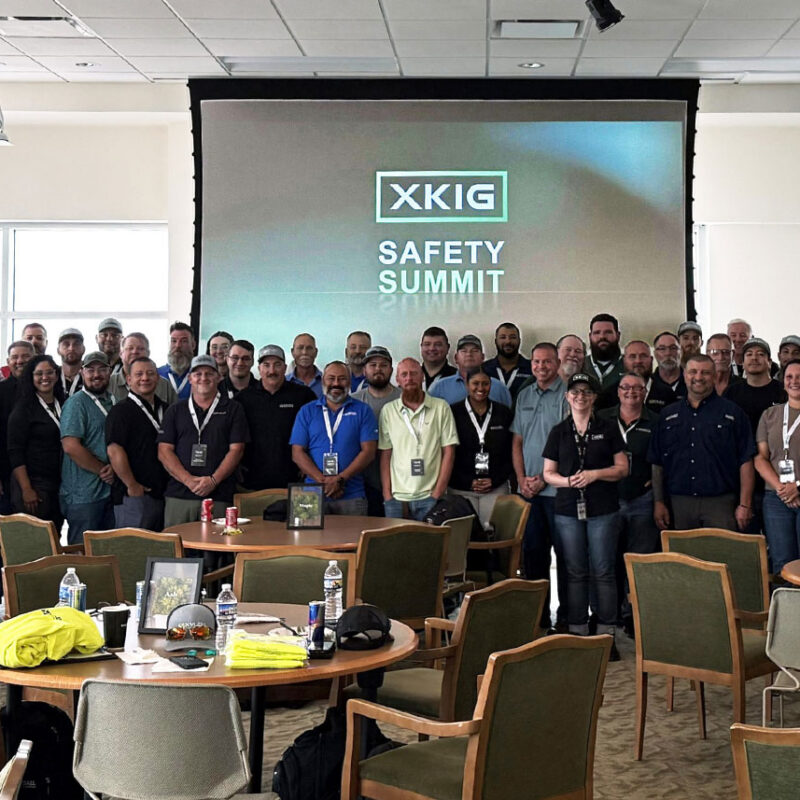
3rd Annual Safety Summit: Building a Safer Future Together

XKIG NEWS
Every Stage of the Storm: How the XKIG Family Responds When Communities Need It Most

XKIG NEWS
An Unexpected Journey into Utility Arboriculture

XKIG NEWS
Inside the 2026 Southeastern Electric Exchange

XKIG NEWS
Leadership, Resilience, and the Future of Energy

XKIG NEWS
Weathering the Storm with Safety

XKIG NEWS
Social Recruiting at Scale: Turning Awareness into Hires
XKIG NEWS
Connecting People, Powering Progress: XKIG’s Leadership Summit Recap

XKIG NEWS
Leading the Way: 2025 MVV Award Winners Across XKIG

XKIG NEWS
From the Field to the Boardroom: Randolph Hoover Joins TCIA Board of Directors

XKIG NEWS
Passing the Climb Forward
